You want to build an off-grid resort. But traditional construction on remote islands is slow, risky, and expensive. There is a better way.
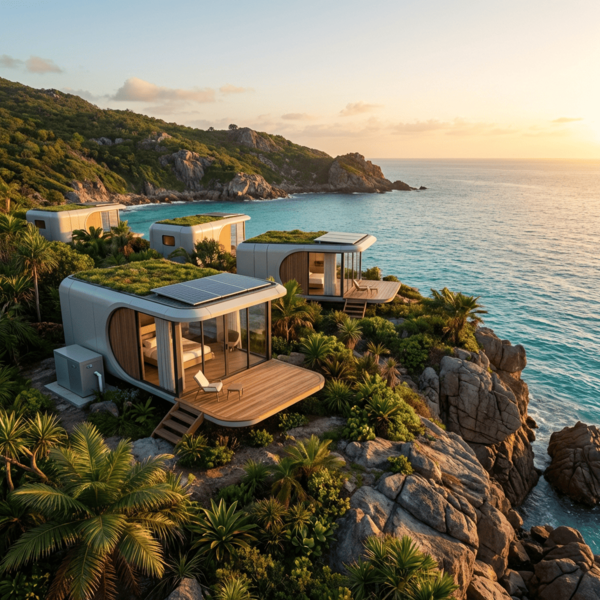
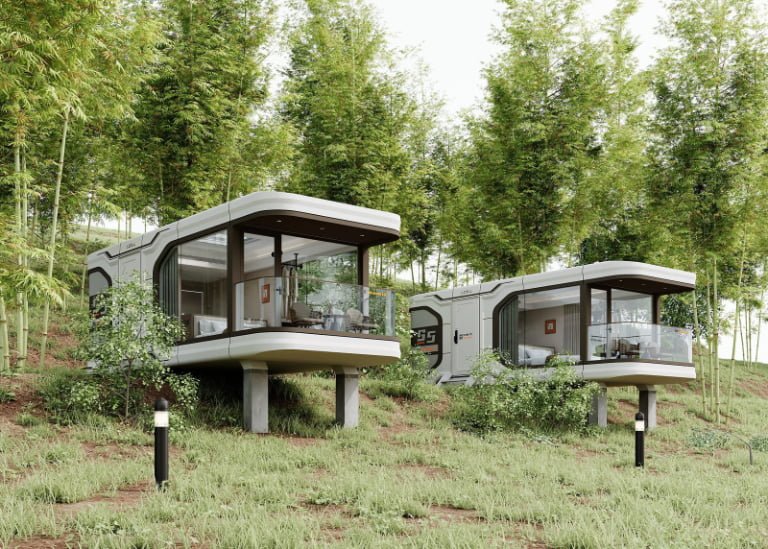
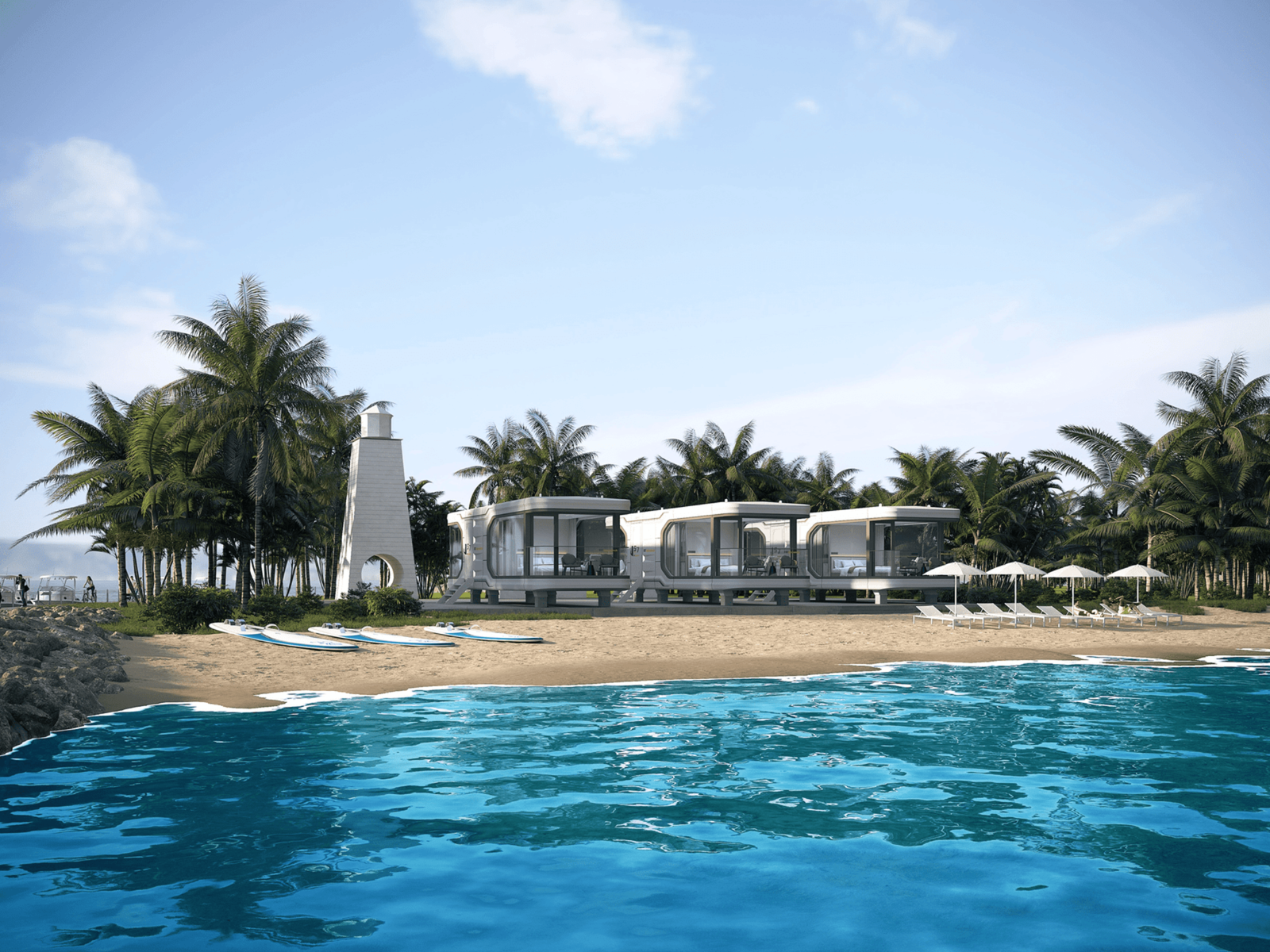
Modular capsule housing lets you deploy fully prefabricated guest units to island, coastal, or forest sites in 10–16 weeks. You skip the long construction cycle. You avoid becoming a general contractor. And you work with a coordination partner who connects you to proven Chinese capsule manufacturers and off-grid system suppliers.
I have spent over 20 years in international trade. My background is in smart water systems, valves, and sanitary hardware. In 2024, I founded Capsule Housing to solve a very specific problem: project developers around the world want modular, off-grid accommodation — but they struggle to find, vet, and coordinate Chinese manufacturers on their own. I am not a factory. I am not a builder. I am a project coordination partner. And in this article, I will show you exactly how modular capsule housing works, how it compares to traditional construction, and what the real process looks like from first call to after-sales.
Who Is Behind Capsule Housing — And Why Does That Matter?
Many resort developers get burned by faceless trading companies. You need to know who you are working with before you trust them with your project.
Capsule Housing is a solution-focused international trade and project partner brand. I bring over 20 years of cross-border procurement experience. My role is to connect you with established capsule manufacturers and off-grid system suppliers in China, and to provide technical coordination so your local architects, engineers, and contractors can do their jobs with clear information.
What does "project coordination partner" actually mean?
Let me be direct. I do not manufacture capsules. I do not design your resort. I do not apply for your building permits. I do not pour your foundations.
What I do is fill the gap between you and the Chinese supply chain. Here is how that breaks down:
| What I Do | What I Do NOT Do |
|---|---|
| Select suitable capsule models for your project | Act as your architect or structural engineer |
| Coordinate with manufacturers on specs and timelines | Guarantee local permit approvals |
| Prepare export documents, freight logistics | Install capsules on your site |
| Provide technical datasheets for your local team | Replace your local contractors |
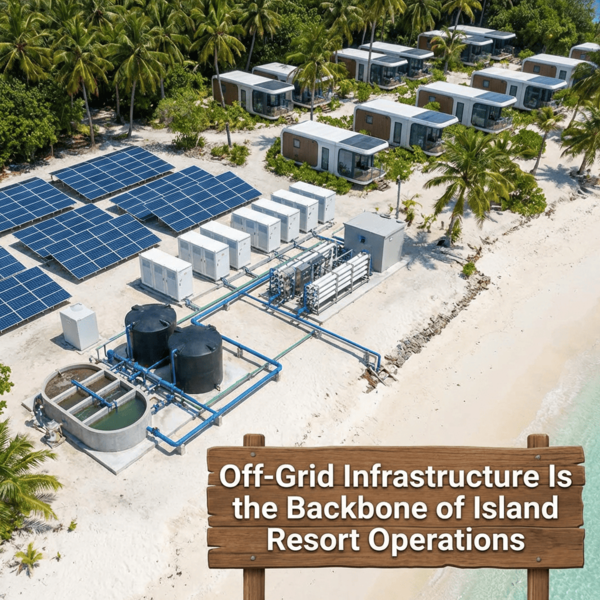
| Integrate off-grid systems (solar, water, storage) | Promise fixed ROI numbers |
This clear separation of roles is important. It reduces misunderstandings. It protects both of us. And it means your local professionals always stay in control of compliance, safety, and installation. I learned this the hard way in my years of trading valves and water systems. The projects that go wrong are the ones where nobody knows who is responsible for what.
How Does Modular Capsule Housing Compare to Traditional Construction?
Traditional building on remote islands takes 12–24 months. Weather delays, labor shortages, and material transport push costs up fast. Most developers underestimate this.
Modular capsule housing cuts that timeline to roughly 10–16 weeks. Capsules are fully prefabricated in a factory, shipped by sea, and lifted into place with a crane. Your on-site work is limited to foundations, utility connections, and final testing.
Where exactly does the time saving come from?
The biggest advantage is parallel workflow. While the factory builds your capsules, your local team prepares the site. These two streams happen at the same time. With traditional construction, everything is sequential — you cannot install walls until the frame is done, and you cannot do interiors until the walls are done.
Here is a side-by-side comparison:
| Factor | Traditional Construction | Modular Capsule Housing |
|---|---|---|
| Total timeline | 12–24 months | 10–16 weeks |
| Weather dependency | High — rain, wind stop work | Low — factory production is indoor |
| On-site labor needed | Large crew, many trades | Small crew for foundations and hookup |
| Quality consistency | Varies by local labor skill | Factory-controlled, repeatable |
| Transport to remote sites | Materials shipped in bulk | Capsules shipped as finished units |
| Interior fit-out | Done on site, slow | Done in factory, ready on arrival |
One thing I want to be honest about: modular does not mean zero on-site work. You still need proper foundations. You still need utility infrastructure — water pipes, electrical lines, wastewater. And if your site is truly remote, you still need to solve power and freshwater. That is where off-grid system integration comes in, and it is a core part of what I coordinate.
What Does the Typical Project Flow Look Like — From First Call to After‑Sales?
Most developers want a clear roadmap before they commit. Without a defined process, cross-border projects fall apart quickly.
A typical Capsule Housing project follows six steps: Discovery, Concept Design, Procurement and Production, Shipping and Logistics, On-Site Installation Support, and After-Sales. Each step has clear deliverables and responsibility boundaries.
What happens at each step?
I will walk through all six stages. I use this process on every project, whether it is a 3-unit Airbnb cluster or a 30-unit island resort.
Step 1: Discovery We start with a call. I ask about your site, your budget range, your target guest profile, and your timeline. I need to understand your local infrastructure — do you have grid power? Municipal water? Road access for trucks and cranes? This step takes about 1–2 weeks.
Step 2: Concept Design Based on your inputs, I propose capsule models and layout options. Capsules range from 18 m² to 38 m² . I provide technical datasheets so your architect or engineer can check compliance with local building codes. I also outline off-grid system needs — solar, energy storage, water production, wastewater treatment. This step takes about 2–3 weeks.
Step 3: Procurement and Production Once you confirm the scope, I coordinate with the manufacturer. Capsule production takes roughly 30 days in the factory. During this time, I also source and align off-grid equipment. Your local team should be preparing foundations and site infrastructure in parallel.
| Stage | Duration | Who Is Responsible |
|---|---|---|
| Discovery | 1–2 weeks | Capsule Housing + Client |
| Concept Design | 2–3 weeks | Capsule Housing + Client's local team |
| Production | ~30 days | Manufacturer (coordinated by Capsule Housing) |
| Shipping | 2–4 weeks (depends on destination) | Freight partner + Capsule Housing |
| Installation | 1–2 weeks on site | Client's local contractor + technical guidance |
| After-sales | Ongoing | Capsule Housing + Manufacturer |
Step 4: Shipping and Logistics Capsules ship by sea in framework containers (11.7 m × 2.5 m). I handle export documentation, customs coordination, and freight booking. Delivery time depends on your port of destination — typically 2–4 weeks from China.
Step 5: On-Site Installation Support A technical team provides guidance for crane lifting and placement. Each capsule weighs between 6 and 10 tons. I recommend a 25-ton crane or larger. Once placed, your local crew connects water, power, and drainage. Then we run a full test before handover.
Step 6: After-Sales I stay available for spare parts sourcing, system troubleshooting, and future expansion planning. If you want to add more units next season, we repeat from Step 2.
What Are the Real Costs and Timelines — And Why Do I Give Ranges Instead of Fixed Numbers?
Every developer wants a firm price and a locked-in date. But in cross-border modular projects, anyone who gives you a fixed guarantee is either lying or hiding risk.
Realistic capsule costs range from $15,000–$50,000 per unit depending on size, interior package, and off-grid systems. Total project timelines range from 10–16 weeks depending on site readiness, shipping distance, and local permitting speed.
Why ranges and not fixed promises?
I have seen too many projects fail because a supplier promised a price that did not include shipping, or a timeline that did not account for customs clearance. I refuse to do that.
Here is what drives cost variation:
| Cost Factor | What Affects It |
|---|---|
| Capsule model and size | 18 m² units cost less than 38 m² units |
| Interior package | Standard vs. luxury fit-out |
| Off-grid systems | Solar + battery + desalination adds cost |
| Shipping distance | Nearby ports are cheaper |
| Local site work | Foundations, roads, crane rental — your local cost |
| Import duties and taxes | Varies by country |
And here is what drives timeline variation:
| Timeline Factor | What Affects It |
|---|---|
| Factory production | ~30 days is standard |
| Shipping | 2–4 weeks depending on route |
| Local permitting | Can add weeks or months — not in my control |
| Site preparation | Depends on terrain and local labor |
| Weather during installation | Crane work needs calm conditions |
I always recommend budgeting a 15–20% contingency on both cost and time. This is not pessimism. This is experience. The projects that finish smoothly are the ones that planned for surprises.
Conclusion
Modular capsule housing gives resort developers a faster, lower-risk path to market — and with the right coordination partner, you never have to become a builder yourself.